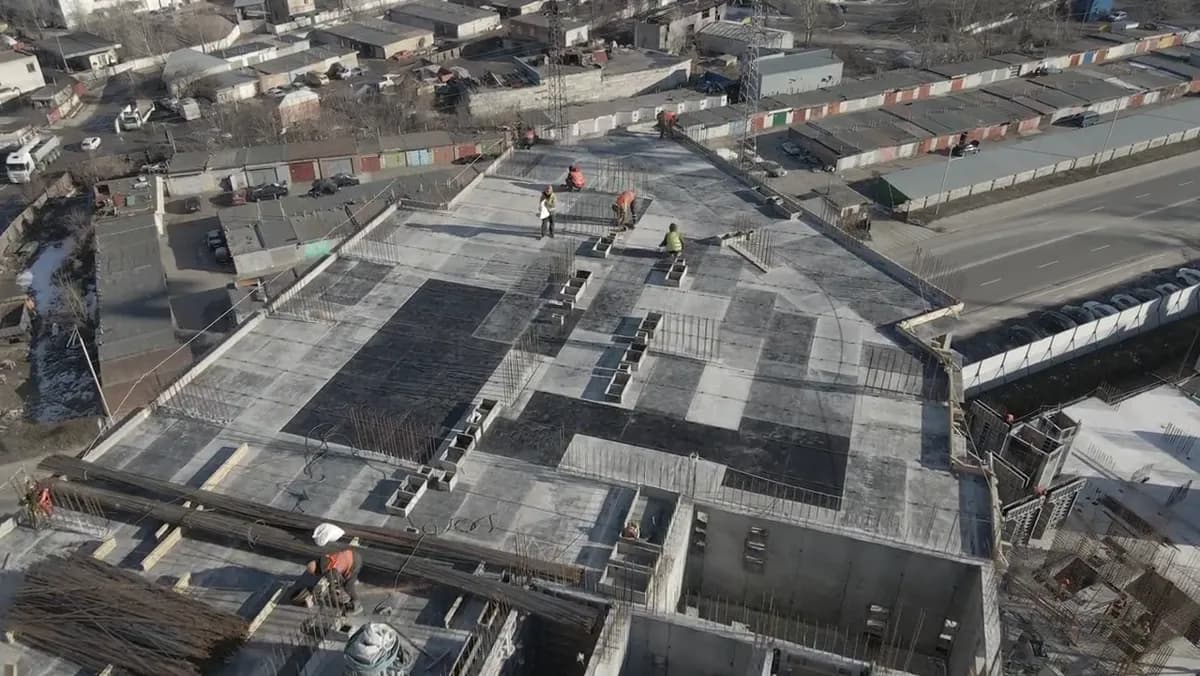
Once concrete is poured, there's no going back. Cracks, leaks and sagging slabs almost always trace back to something that was missed before casting. The good news: you don't need to be an engineer to catch the big problems. Use this checklist on the day before your slab is cast.
1. Shuttering is level and firmly supported
The formwork (shuttering) holds the wet concrete in shape. Check that:
- The shuttering plates are level and joints are tight, so no gaps leak cement slurry
- Props (supports) are straight, closely spaced and resting on firm ground, not loose soil or bricks
2. Steel matches the structural drawing
Ask your site engineer to show you the drawing and verify:
- Bar diameters (8mm, 10mm, 12mm etc.) match the design
- Spacing between bars matches the design, typically measured centre to centre
- Extra bars are provided at corners, openings and cantilevers
3. Cover blocks are in place
Cover blocks keep steel off the shuttering so concrete fully surrounds it. Without them, steel rusts and the slab weakens over time. Look for blocks under the bottom mesh every 2–3 feet.
4. Top steel is supported on chairs
In slabs with top reinforcement, bent-bar "chairs" hold the top steel at the right height. If the top steel is lying flat on the bottom steel, it won't do its job.
5. Steel is clean and rust-free
Light surface rust is normal, but flaky rust, mud, oil or paint on the bars reduces bond with concrete. These should be cleaned before casting.
6. Electrical conduits and boxes are placed
Fan hooks, light points and conduit pipes must go in before casting. Check that:
- Every planned light and fan point has a box
- Conduits are tied down and don't reduce the slab's concrete cover
7. Plumbing sleeves are provided
Pipes that pass through the slab (bathrooms, drains, rainwater outlets) need sleeves placed now. Cutting a finished slab later weakens it.
8. Concrete grade and mix are confirmed
Most residential slabs use M20 or M25 grade concrete. Confirm:
- Whether it's ready-mix (RMC) or site-mixed
- If site-mixed, that cement, sand and aggregate are measured by volume, not by eye
- That water isn't added freely to make it "flow": excess water weakens concrete
9. Vibrator and enough labour are arranged
Concrete must be compacted with a needle vibrator to remove air pockets (honeycombing). A slab should ideally be cast in one continuous pour, so ensure there's enough labour and material on site.
10. Curing plan is ready
Concrete gains strength slowly. Plan for:
- Ponding (small water pools) or wet hessian from the day after casting
- Curing for at least 14 days, ideally longer in summer
- Props left in place for the design period (usually 14–21 days for slabs)
Why this matters
A slab is designed to last 50+ years. A few hours of checking before casting can prevent leaks, cracks and costly repairs for decades.
At Brick & Shape, every slab goes through a documented checklist and is verified by our engineer before a single bag of cement is mixed. Explore our construction packages, or talk to us about your project.